· Dana Whitfield
Dog names: the shortlist, and the test every name has to pass
Every list of dog names is the same list. What almost none of them tell you is that a name has a job to do. It has to carry across a park, survive being shouted, stay distinct from the six words you will train, and still be legible when it is stamped into brass on a moving dog. Most names fail at least one of those, and you only find out in month three.
The names that keep coming back
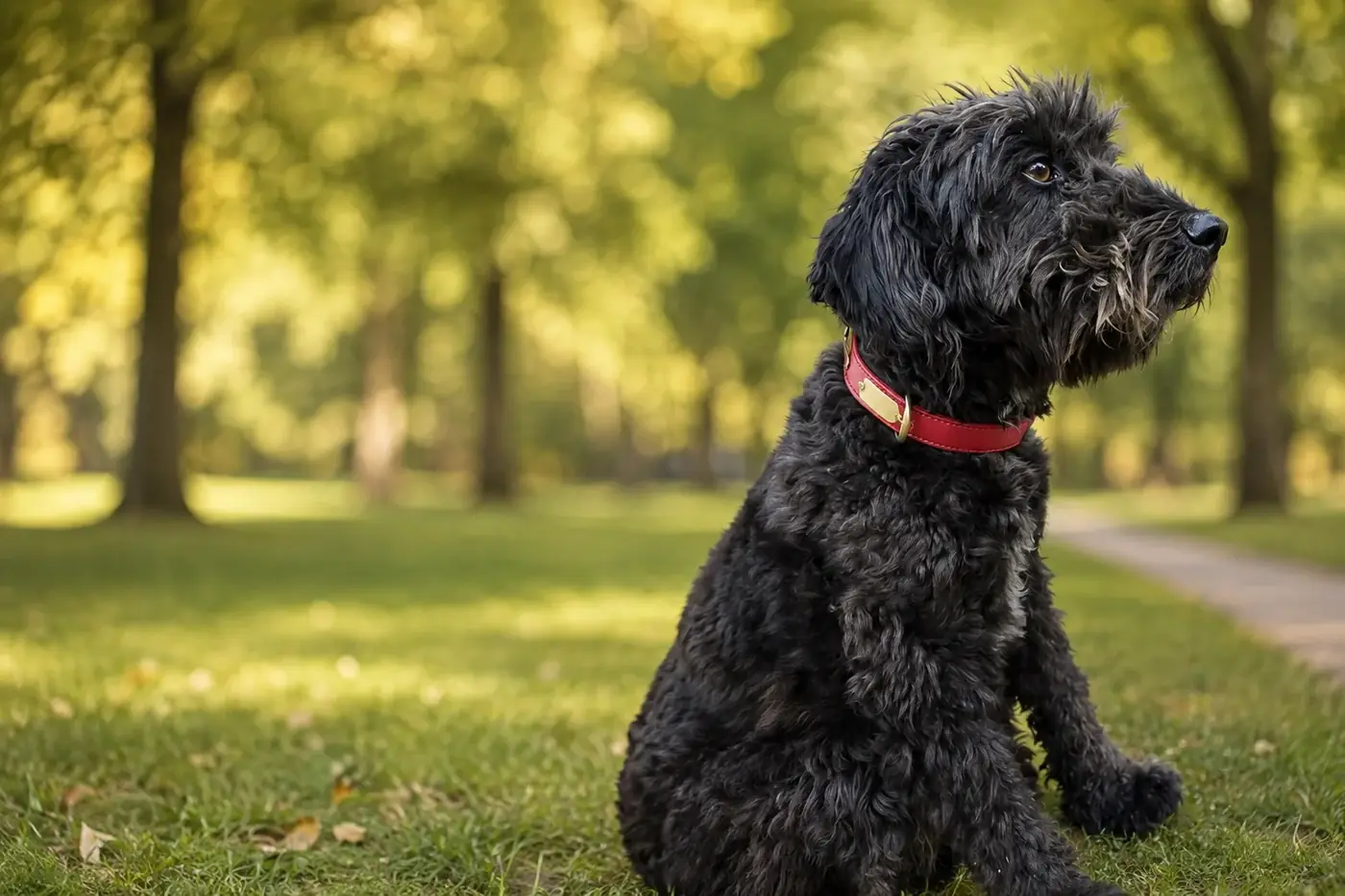
Across the major US name lists, the same twenty names have held the top of the table for years. That consistency is not a lack of imagination — it is the shortlist that survived the field test. Short, hard-edged, easy to shout.
| Female | Male | Why it works |
|---|---|---|
| Luna | Max | Two clear vowels, no soft start |
| Bella | Charlie | Stressed first syllable |
| Daisy | Cooper | Hard opening consonant |
| Lucy | Buddy | Ends on a bright vowel |
| Lily | Milo | Carries at distance |
| Zoe | Rocky | Impossible to mishear |
| Lola | Bear | One syllable, all weight |
| Sadie | Teddy | Rhythm holds when shouted |
| Molly | Duke | No overlap with commands |
| Bailey | Leo | Short enough to engrave |
A starting point, not an instruction. The test below matters more than the ranking.
Say it out loud, at volume, before you decide
A name that reads beautifully on a screen can be unusable in a field. The test takes ten seconds: stand up, and call it across a room as if the dog were fifty yards away and moving. Three things become obvious immediately.
Names that start with a vowel lose their front edge when shouted. Names of three or more syllables get shortened by everyone except you, which means your dog learns the short version anyway and you may as well have chosen it. And names ending in a soft consonant vanish into wind, while names ending in a vowel carry.
This is the whole reason two syllables with a hard opening dominates every list. It is not fashion. It is what still works at the far end of a park.
The names that collide with your commands
This is the mistake that costs the most and gets mentioned the least. A dog does not hear words, it hears sound shapes. A name that shares a shape with a command produces a dog that hesitates on both.
| Name | Collides with | What you see |
|---|---|---|
| Bo, Beau, Moe | No | Dog freezes when called |
| Kit, Kip | Sit | Sits when you wanted recall |
| Ray, Mae, Jay | Stay | Stops instead of coming |
| Dow, Bao | Down | Drops on hearing its own name |
| Kelsey, Chelsea | Heel | Blurred recall at distance |
If you have already fallen in love with one of these, you are not stuck. Change the command rather than the name: use "off" instead of "down", or a hand signal for the stay. The name is the one word your dog hears ten thousand times a year, so it is the one that should win.
Puppy names: you are naming a fourteen-year-old dog
The single most useful filter for a puppy name is to picture the dog at eight years old, in a vet's waiting room, being called by a receptionist. Names chosen for a small round animal — the food names, the joke names, the ones built on how tiny he is right now — age at a different speed than the dog does.
The other puppy-specific point is timing. A puppy learns his name in a few days, and re-learning it later is genuinely harder than teaching it the first time. Decide before he arrives if you can, and get the whole household using the same version from day one. A dog called Alexander by one person and Xander by another learns neither reliably.
What you should not rush is the engraving, and for the opposite reason: a puppy outgrows collars, not names. Our guide to a first collar goes through when to size up and what to put on a plate your puppy will grow out of.
Unique without being unusable
There is a real reason to avoid the top ten, and it has nothing to do with originality. It is the dog park problem: shout Luna in any US park and you will have a conversation with three owners. If recall matters to you — and it matters most on the day it matters — a name nobody else is using is a functional advantage.
The trap is that most "unique" lists solve this by going long and soft, which breaks everything above. The way through is to keep the sound structure of the top-ten names and change only the word:
- Keep the shape, move the word. If Luna works, so do Juno, Nova, Kira, Vesper. Same two syllables, same hard start, none of them in the top fifty.
- Places travel well. Cairo, Denver, Juneau, Odessa. Distinctive, and every one of them passes the shout test.
- Objects with edges. Flint, Onyx, Cedar, Bolt. Short, no command overlap, and they hold up when the dog is gray around the muzzle.
- Avoid the apostrophe and the silent letter. Anything that has to be spelled out loud will be spelled out loud, at a vet's desk, forever.
If you want the same filter applied by gender, we have split those out: female dog names and male dog names.
What actually fits on the collar
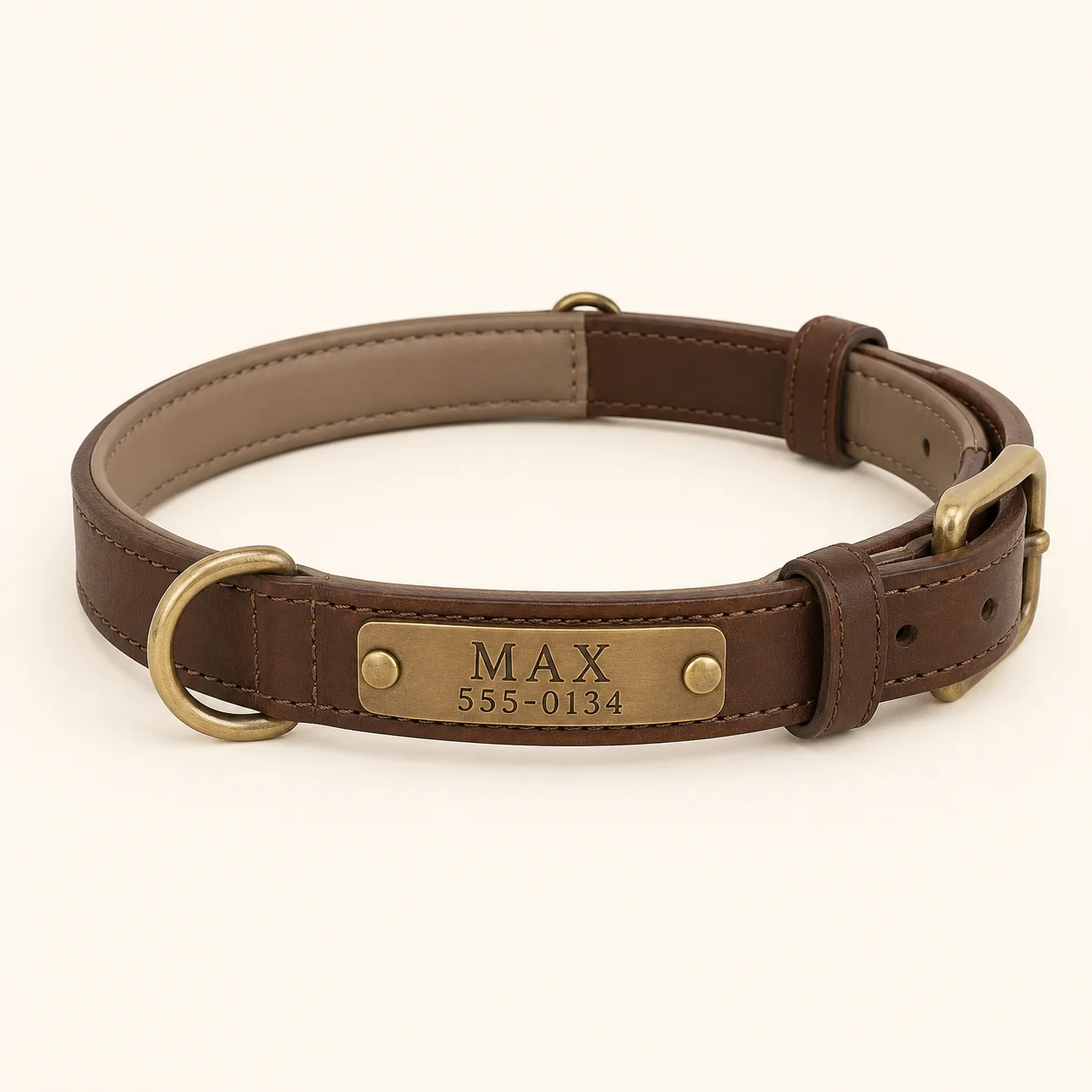
A name that does not fit the plate gets abbreviated by the engraver, and abbreviation is exactly what you do not want on the one line a stranger reads. Our plate takes twenty characters per line, across two lines. In practice that is generous for the name and tight for everything else, which is the right way round.
| Line | Limit | What to put there |
|---|---|---|
| Line 1 | 20 characters | The name, in capitals |
| Line 2 | 20 characters | One phone number you answer |
Capitals read further away than mixed case at the same height, which is why the plate is stamped that way. A seven-letter name in capitals is legible at arm's length on a dog that will not stand still; a fourteen-letter one is not.
The name is the smaller half of the plate
Here is the part that gets inverted. Owners spend weeks on the name and thirty seconds on the second line. The second line is the one that brings the dog home. In an ASPCA survey of 1,015 households published in 2012, only 6% of owners recovered their dog at a shelter — the overwhelming majority were returned by a person who picked the dog up nearby and needed a way to reach someone.
That person reads the plate once, at arm's length, holding a dog that does not know them. What they need is a number. We go through what belongs on the second line, and what should stay off it, in what to put on a dog ID tag.
Should the name be on the collar at all?
It is a fair question and it comes up often. The argument against is that a stranger who can call your dog by name has an easier time catching him. The argument for is everything above: a named dog is a dog someone can calm down, and the recovery evidence is overwhelmingly about the phone number rather than the name.
The practical answer most owners land on is both, on one plate: the name because it works on the day someone finds your dog frightened in a hedge, and the number because that is what gets him home. If the first argument genuinely worries you, engrave the number alone — the plate does not care, and a nameless plate still does the job that matters.
Changing the name of a rescue dog
You can, and it is usually easier than people expect. An adult dog associates a sound with attention, not with identity, and the association transfers in a fortnight if you pair the new name with something worth turning around for. Where it goes wrong is halfway measures: using the old name when you are cross and the new one when you have food produces a dog that responds to neither.
If the two names sound nothing alike, run the collision table above on the new one before you commit. A rescue dog is often the one with the least reliable recall to begin with, which is exactly the dog that cannot afford a name that rhymes with "no".
What to do once you have decided
Say it out loud for two days before you engrave anything. Names that survive being shouted in your own hallway survive the park. Then put it on something permanent: a collar with the name stamped into the plate stays readable in a way a hanging disc does not, because a riveted plate cannot spin, fall off, or wear its lettering flat against a bowl.
If your dog already has a collar he gets on with, a separate engraved name tag does the same job on the existing strap. Either way, the name you chose ends up in the one place it has to be.

Dana Whitfield · Curator, Namouf
Dana writes the sizing guidance and the guides on this site.